Patent Granted: Method and system for optimisation of DBS programming

Scientific Abstract
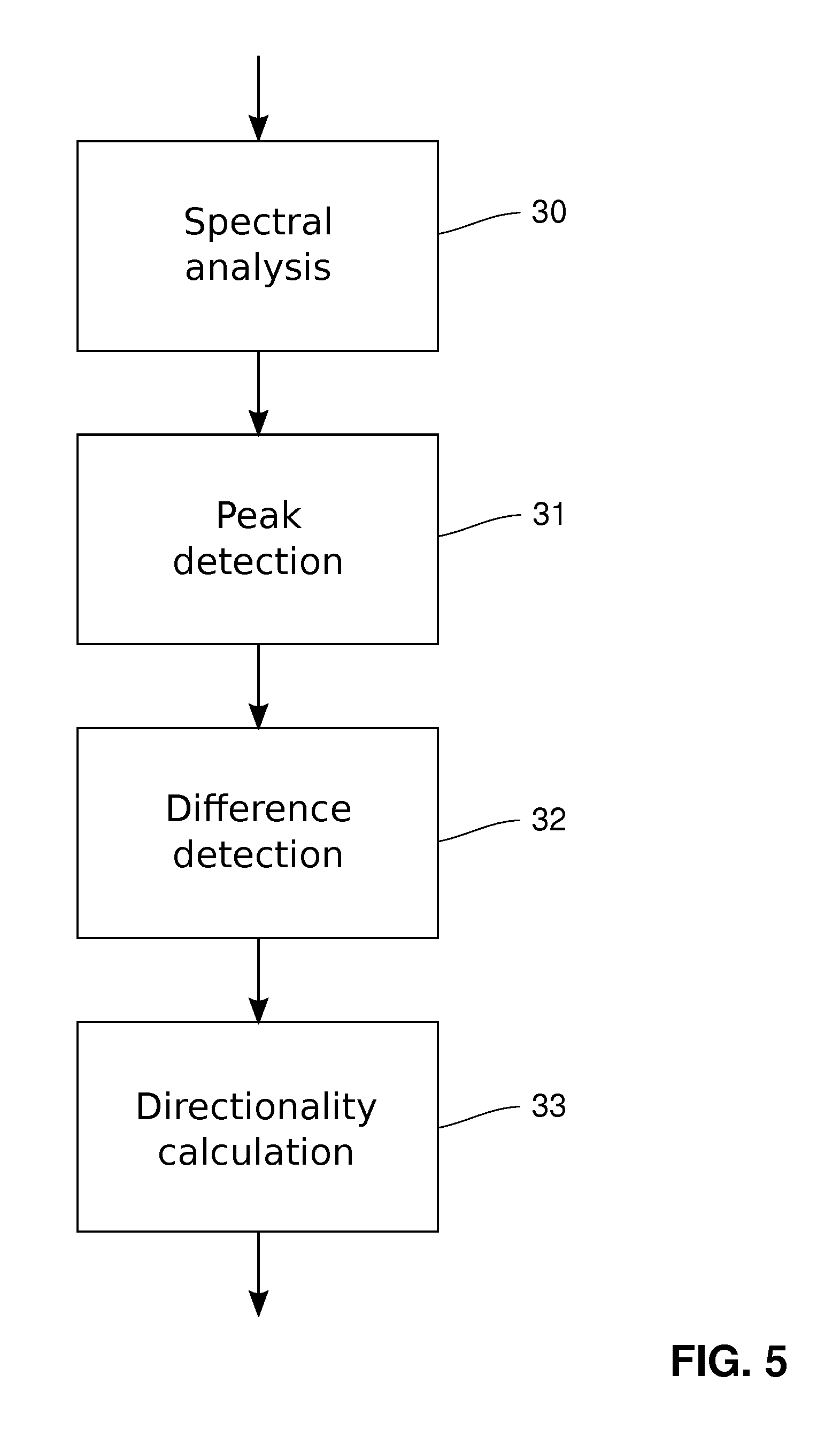
A method and system are described for, based upon a plurality of previously-acquired directional LFP signals measured in a plurality of different directions at a directional sensor lead located in a predetermined region of a patient's brain, determining optimised patient-specific programming parameters for programming a directional stimulation lead with parameters for stimulating the said region. The method comprises a first step of determining, over at least one predetermined frequency range, a power-frequency variation curve of each of the directional LFP signals, a second step of identifying frequency peaks in the power- frequency variation curves, a third step of detecting one of the identified frequency peaks at which a maximum difference in signal power between the directional LFP signals occurs, and a fourth step of calculating a plurality of directional stimulation weighting factors on the basis of the relative signal powers of the directional LFP signals at the detected frequency peak.
Similar content
Dithering suppresses half-harmonic neural synchronisation to photic stimulation in humans.
Frequency-specific and spatiotemporal dynamics of β-γ phase-amplitude coupling in Parkinson's disease.
Characterising motor and cognitive contributions of cortical beta oscillations and their modulation with rTMS.
Flexible and Stable Cycle-by-Cycle Phase-Locked Deep Brain Stimulation System Targeting Brain Oscillations in the Management of Movement Disorders
Citation
External Content
Downloads
Patent Granted: Method and system for optimisation of DBS programming
Scientific Abstract
A method and system are described for, based upon a plurality of previously-acquired directional LFP signals measured in a plurality of different directions at a directional sensor lead located in a predetermined region of a patient's brain, determining optimised patient-specific programming parameters for programming a directional stimulation lead with parameters for stimulating the said region. The method comprises a first step of determining, over at least one predetermined frequency range, a power-frequency variation curve of each of the directional LFP signals, a second step of identifying frequency peaks in the power- frequency variation curves, a third step of detecting one of the identified frequency peaks at which a maximum difference in signal power between the directional LFP signals occurs, and a fourth step of calculating a plurality of directional stimulation weighting factors on the basis of the relative signal powers of the directional LFP signals at the detected frequency peak.
Citation
External Content
Downloads