Evoked resonant neural activity long-term dynamics can be reproduced by a computational model with vesicle depletion.



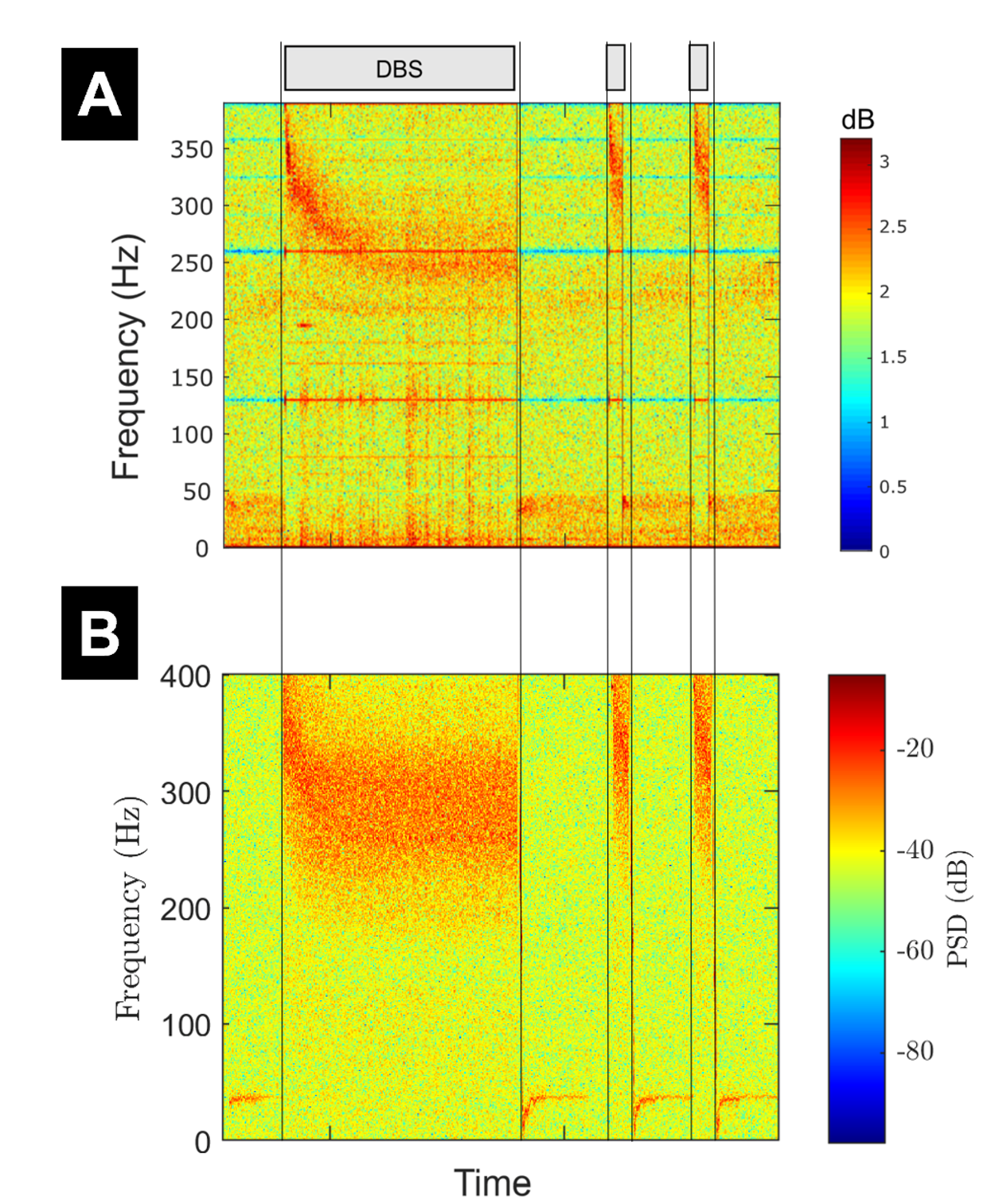
Deep brain stimulation generates signals known as evoked resonant neural activity (ERNA). These signals can be used to fine tune where stimulation should be provided to treat Parkinson’s. However, the mechanisms of how they are generated by stimulation are not fully understood. To look for the origins of ERNA, we propose a mathematical model informed by data. The model's ability to replicate the slow dynamics of ERNA observed in people with Parkinson's shows its potential for guiding future research.
Scientific Abstract
Similar content
Pilot Trial of the Picostim® Deep Brain Stimulation System for Children With Epilepsy: A Prospective, Open-Label Medical Device Study of a System Optimised for Paediatric Neuromodulation
Post-Ictal Sleep Changes in Human Focal Epilepsy.
Towards network-guided neuromodulation for epilepsy.
A cardiac pulse signal affects local field potentials recorded from deep brain stimulation electrodes across clinical targets
Citation
DOI
Free Full Text at Europe PMC
PMC11300885Downloads
Evoked resonant neural activity long-term dynamics can be reproduced by a computational model with vesicle depletion.
Deep brain stimulation generates signals known as evoked resonant neural activity (ERNA). These signals can be used to fine tune where stimulation should be provided to treat Parkinson’s. However, the mechanisms of how they are generated by stimulation are not fully understood. To look for the origins of ERNA, we propose a mathematical model informed by data. The model's ability to replicate the slow dynamics of ERNA observed in people with Parkinson's shows its potential for guiding future research.
Scientific Abstract
Citation
DOI
Free Full Text at Europe PMC
PMC11300885Downloads