Relationship between skill training and skill transfer through the example of bimanual motor learning.


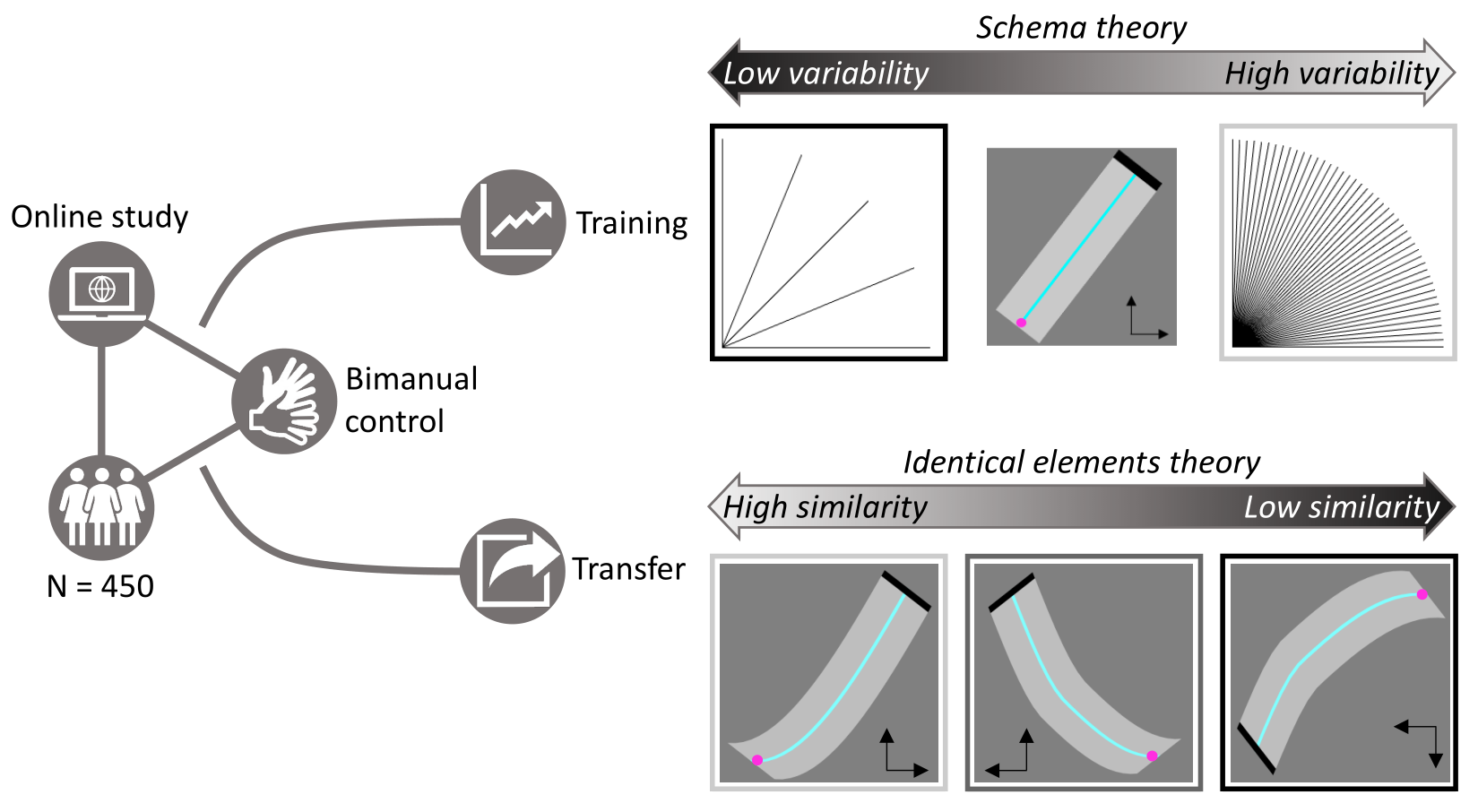
Our daily lives involve repeated training, for example, in aiming to increase our performance of an action ("skill learning"). We benefit from the acquired skill when performing other actions ("skill transfer"). This work explores the relationship between skill training and skill transfer through the example of two-handed motor learning, taking advantage of online studies to achieve a large and diverse sample.
Scientific Abstract
Similar content
Dr Jeffrey Stedehouder awarded Cambridge NeuroWorks Blue Sky Proof-of-Concept Award
Distinct In Vivo Electrophysiological Profiles of Mediodorsal Thalamus Subdivisions
Modulation of motor cortical theta and gamma oscillations using phase-targeted, closed-loop optogenetic stimulation of local excitatory and inhibitory neurons.
Exploring the relationship between stroke lesion characteristics and sleep in chronic stroke survivors
Citation
DOI
Free Full Text at Europe PMC
PMC7615689External Content
Downloads
Relationship between skill training and skill transfer through the example of bimanual motor learning.
Our daily lives involve repeated training, for example, in aiming to increase our performance of an action ("skill learning"). We benefit from the acquired skill when performing other actions ("skill transfer"). This work explores the relationship between skill training and skill transfer through the example of two-handed motor learning, taking advantage of online studies to achieve a large and diverse sample.
Scientific Abstract
Citation
DOI
Free Full Text at Europe PMC
PMC7615689External Content
Downloads