Patent Granted: Measurement of electrophysiological signals during stimulation of a target area of a body


Scientific Abstract
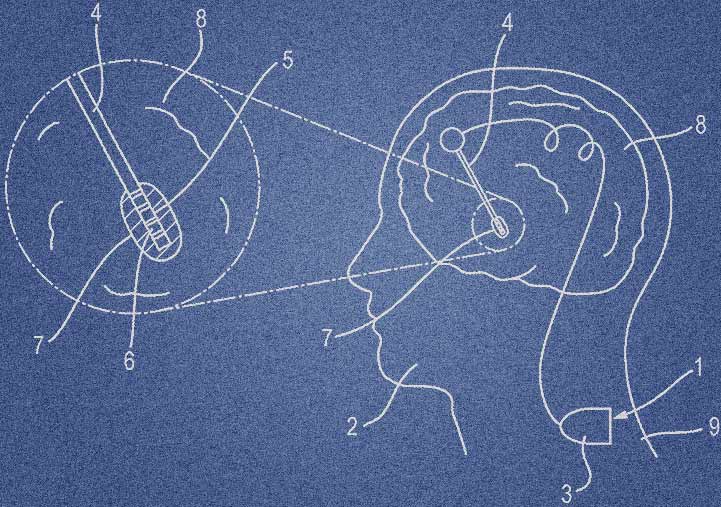
When generating a stimulation signal comprising stimulation pulses delivered to a target area of a human or animal body, an electrophysiological signal measured from the body for closed-loop control of the stimulation signal, is sampled, at a sampling frequency in an analogue-to-digital converter for deriving a feedback signal for closed-loop control of the stimulation signal. The generation of the stimulation signal and the sampling of the electrophysiological signal are synchronised and have a relative phase selected to cause the sampling to occur outside the stimulation pulses, which prevents the effect of the stimulation pulses from interfering with the digital electrophysiological signal, whiles allowing maintenance of Nyquist-Shannon rules and the integrity of the discrete Laplace transform (z-transform) required in discrete control theory.
Similar content
Dithering suppresses half-harmonic neural synchronisation to photic stimulation in humans.
Frequency-specific and spatiotemporal dynamics of β-γ phase-amplitude coupling in Parkinson's disease.
Characterising motor and cognitive contributions of cortical beta oscillations and their modulation with rTMS.
Flexible and Stable Cycle-by-Cycle Phase-Locked Deep Brain Stimulation System Targeting Brain Oscillations in the Management of Movement Disorders
Citation
External Content
Downloads
Patent Granted: Measurement of electrophysiological signals during stimulation of a target area of a body
Scientific Abstract
When generating a stimulation signal comprising stimulation pulses delivered to a target area of a human or animal body, an electrophysiological signal measured from the body for closed-loop control of the stimulation signal, is sampled, at a sampling frequency in an analogue-to-digital converter for deriving a feedback signal for closed-loop control of the stimulation signal. The generation of the stimulation signal and the sampling of the electrophysiological signal are synchronised and have a relative phase selected to cause the sampling to occur outside the stimulation pulses, which prevents the effect of the stimulation pulses from interfering with the digital electrophysiological signal, whiles allowing maintenance of Nyquist-Shannon rules and the integrity of the discrete Laplace transform (z-transform) required in discrete control theory.
Citation
External Content
Downloads