Patent Granted: Method and system for optimisation of DBS programming

Scientific Abstract
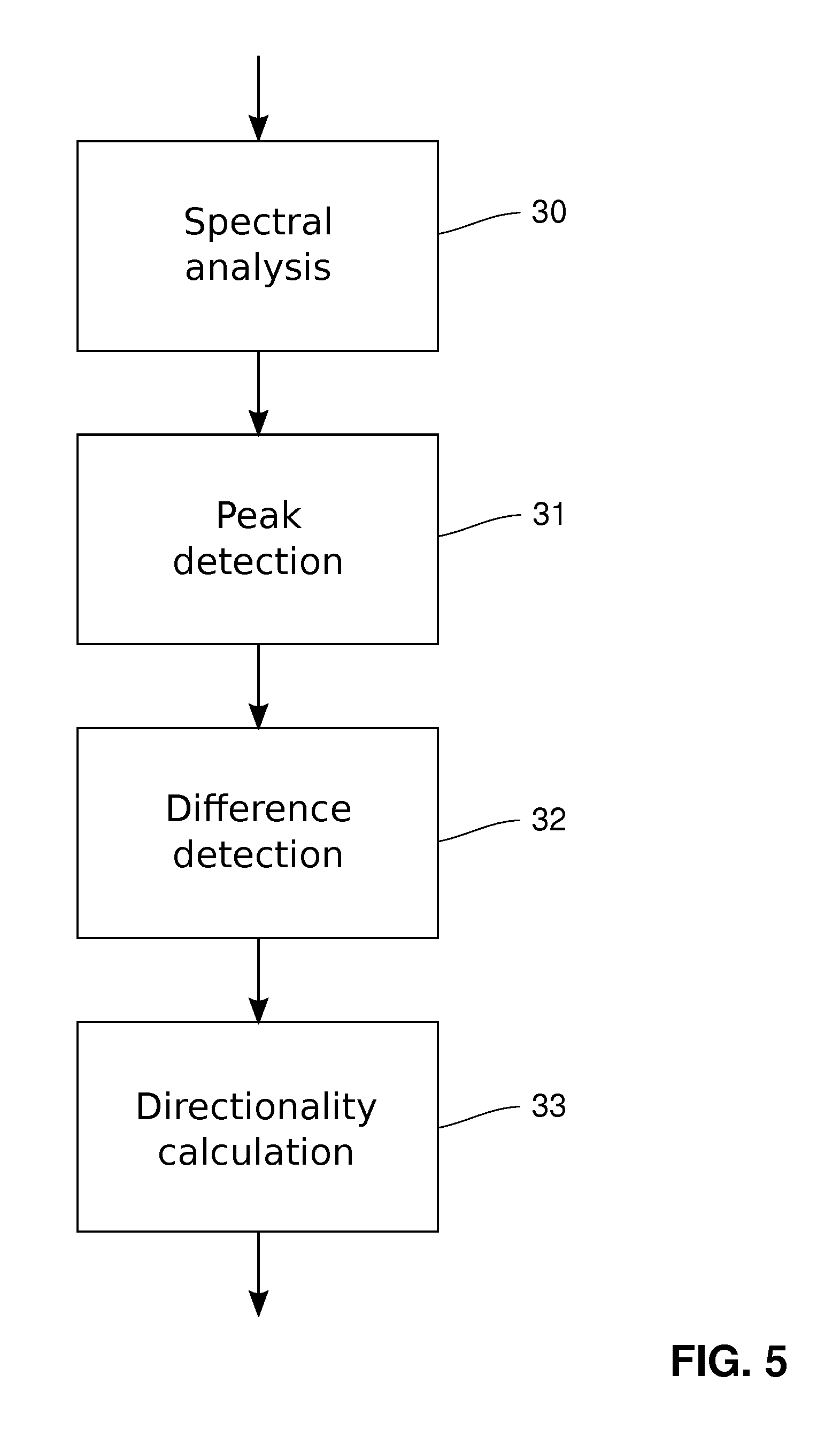
A method and system are described for, based upon a plurality of previously-acquired directional LFP signals measured in a plurality of different directions at a directional sensor lead located in a predetermined region of a patient's brain, determining optimised patient-specific programming parameters for programming a directional stimulation lead with parameters for stimulating the said region. The method comprises a first step of determining, over at least one predetermined frequency range, a power-frequency variation curve of each of the directional LFP signals, a second step of identifying frequency peaks in the power- frequency variation curves, a third step of detecting one of the identified frequency peaks at which a maximum difference in signal power between the directional LFP signals occurs, and a fourth step of calculating a plurality of directional stimulation weighting factors on the basis of the relative signal powers of the directional LFP signals at the detected frequency peak.
Similar content
Characterising motor and cognitive contributions of cortical beta oscillations and their modulation with rTMS.
Flexible and Stable Cycle-by-Cycle Phase-Locked Deep Brain Stimulation System Targeting Brain Oscillations in the Management of Movement Disorders
Driving theta-gamma oscillations modulates extrasynaptic GABAergic tone: a tACS-TMS study
Dithering suppresses half-harmonic neural synchronisation to photic stimulation in humans
Citation
External Content
Downloads
Patent Granted: Method and system for optimisation of DBS programming
Scientific Abstract
A method and system are described for, based upon a plurality of previously-acquired directional LFP signals measured in a plurality of different directions at a directional sensor lead located in a predetermined region of a patient's brain, determining optimised patient-specific programming parameters for programming a directional stimulation lead with parameters for stimulating the said region. The method comprises a first step of determining, over at least one predetermined frequency range, a power-frequency variation curve of each of the directional LFP signals, a second step of identifying frequency peaks in the power- frequency variation curves, a third step of detecting one of the identified frequency peaks at which a maximum difference in signal power between the directional LFP signals occurs, and a fourth step of calculating a plurality of directional stimulation weighting factors on the basis of the relative signal powers of the directional LFP signals at the detected frequency peak.
Citation
External Content
Downloads