Over and above frequency: Gamma oscillations as units of neural circuit operations.


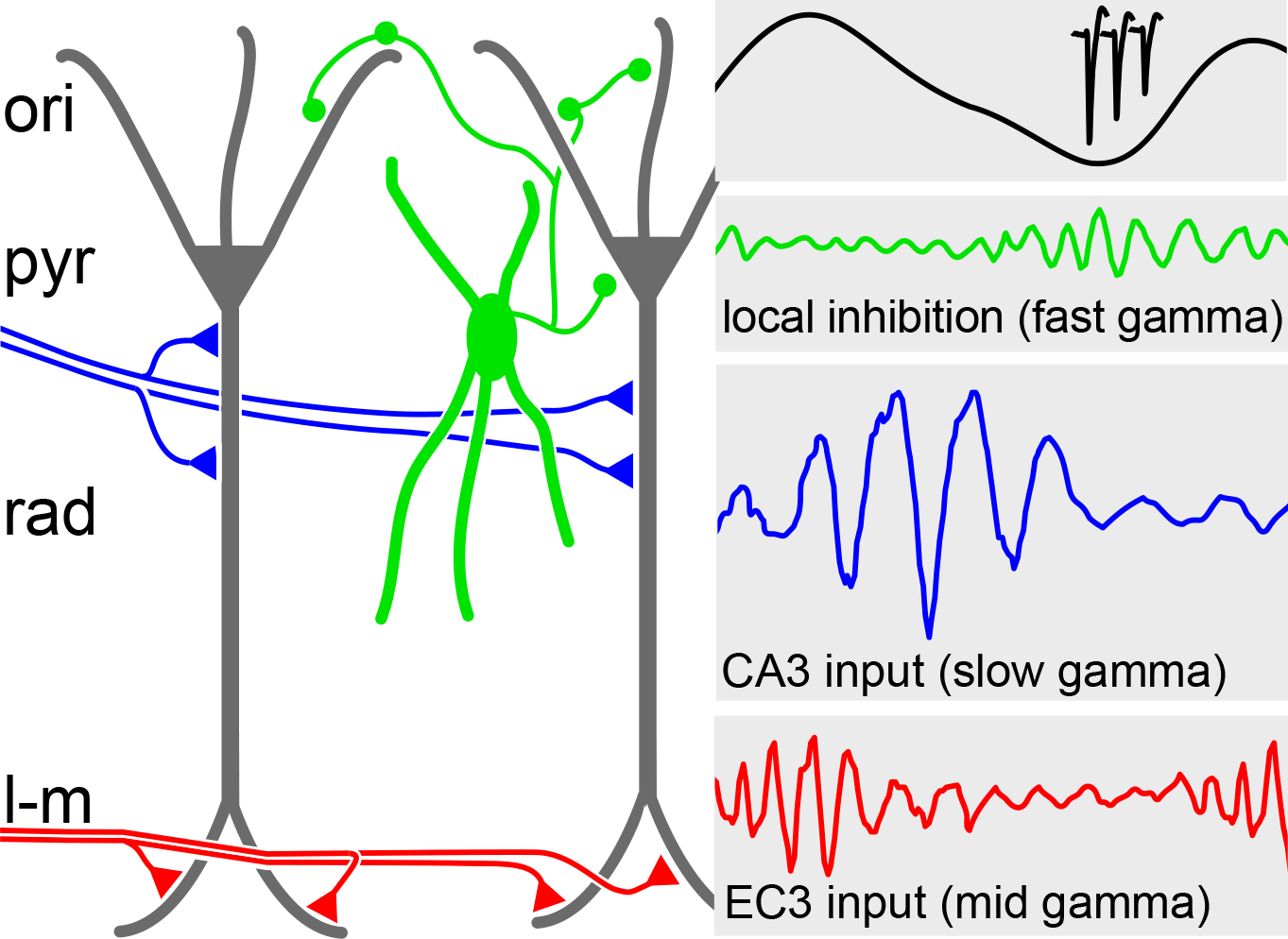
Nerve cells can coordinate their electrical activity in a rhythmic manner, giving rise to brain waves. How to define these brain waves, interpret their modulation and identify their roles are questions central to scientific research in the field of systems neuroscience. In this Perspective, the authors present recent findings on a type of brain waves referred to as gamma oscillations with the view to discuss their biological definition and meaning.
Scientific Abstract
Similar content
A learning-evoked slow-oscillatory architecture paces population activity for offline reactivation across the human medial temporal lobe
A learning-evoked slow-oscillatory architecture paces population activity for offline reactivation across the human medial temporal lobe
Hippocampal Ripple Diversity organises Neuronal Reactivation Dynamics in the Offline Brain
Citation
DOI
Free Full Text at Europe PMC
PMC7614431Downloads
Over and above frequency: Gamma oscillations as units of neural circuit operations.
Nerve cells can coordinate their electrical activity in a rhythmic manner, giving rise to brain waves. How to define these brain waves, interpret their modulation and identify their roles are questions central to scientific research in the field of systems neuroscience. In this Perspective, the authors present recent findings on a type of brain waves referred to as gamma oscillations with the view to discuss their biological definition and meaning.
Scientific Abstract
Citation
DOI
Free Full Text at Europe PMC
PMC7614431Downloads