Conflict Detection in a Sequential Decision Task Is Associated with Increased Cortico-Subthalamic Coherence and Prolonged Subthalamic Oscillatory Response in the β Band.

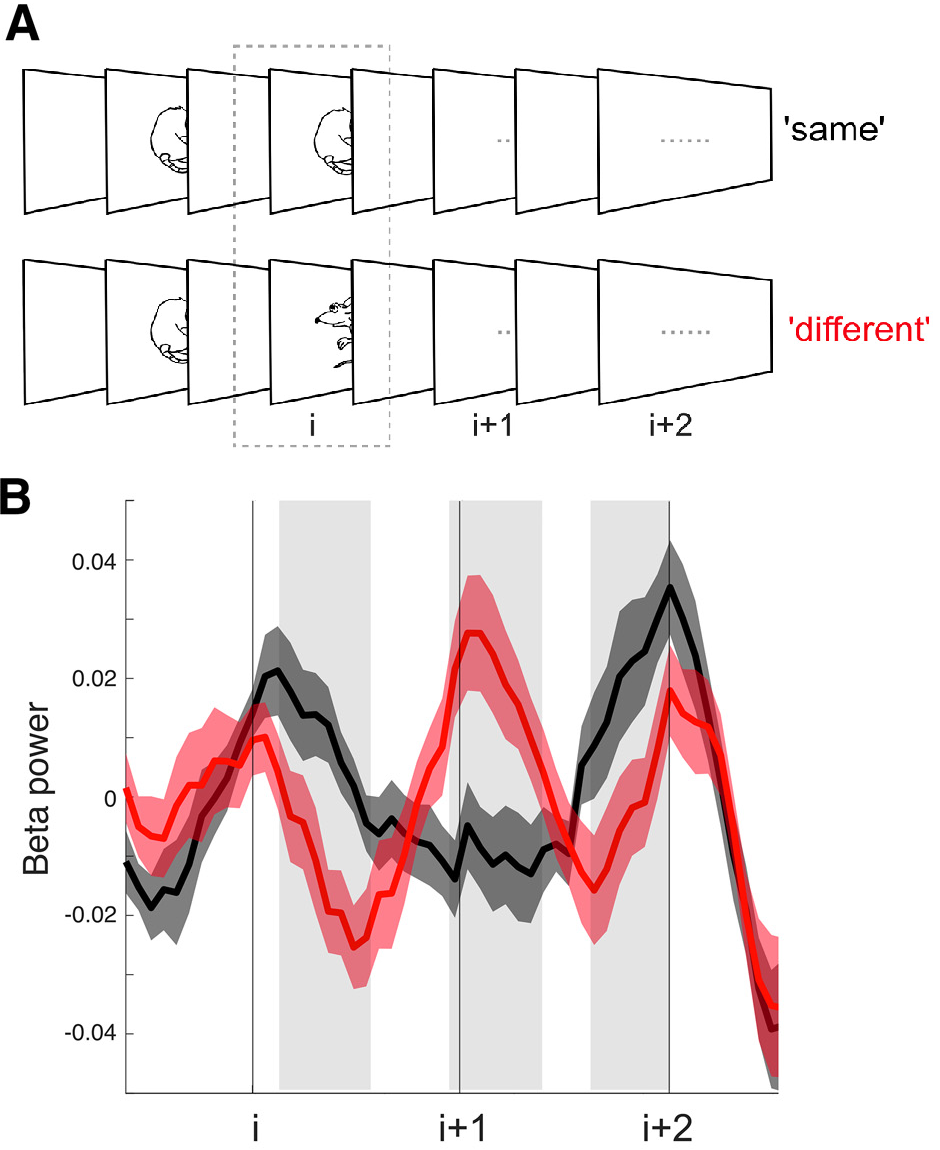
When new information conflicts with previous information, it often takes longer to make decisions because all the evidence needs to be carefully weighed up. This slowing of decisions could involve a part of the brain called the subthalamic nucleus. In support of this idea, we show in this paper that nerve cell activity in the subthalamic nucleus changes when humans observe conflicting information.
Scientific Abstract
Similar content
ePC: Fast and Deep Predictive Coding in Digital Simulation
ePC: Fast and Deep Predictive Coding in Digital Simulation
On the Infinite Width and Depth Limits of Predictive Coding Networks
Temporally distinct reward and action prediction error signals during value learning and habit formation
Citation
DOI
Free Full Text at Europe PMC
PMC9186803Downloads
Conflict Detection in a Sequential Decision Task Is Associated with Increased Cortico-Subthalamic Coherence and Prolonged Subthalamic Oscillatory Response in the β Band.
When new information conflicts with previous information, it often takes longer to make decisions because all the evidence needs to be carefully weighed up. This slowing of decisions could involve a part of the brain called the subthalamic nucleus. In support of this idea, we show in this paper that nerve cell activity in the subthalamic nucleus changes when humans observe conflicting information.
Scientific Abstract
Citation
DOI
Free Full Text at Europe PMC
PMC9186803Downloads