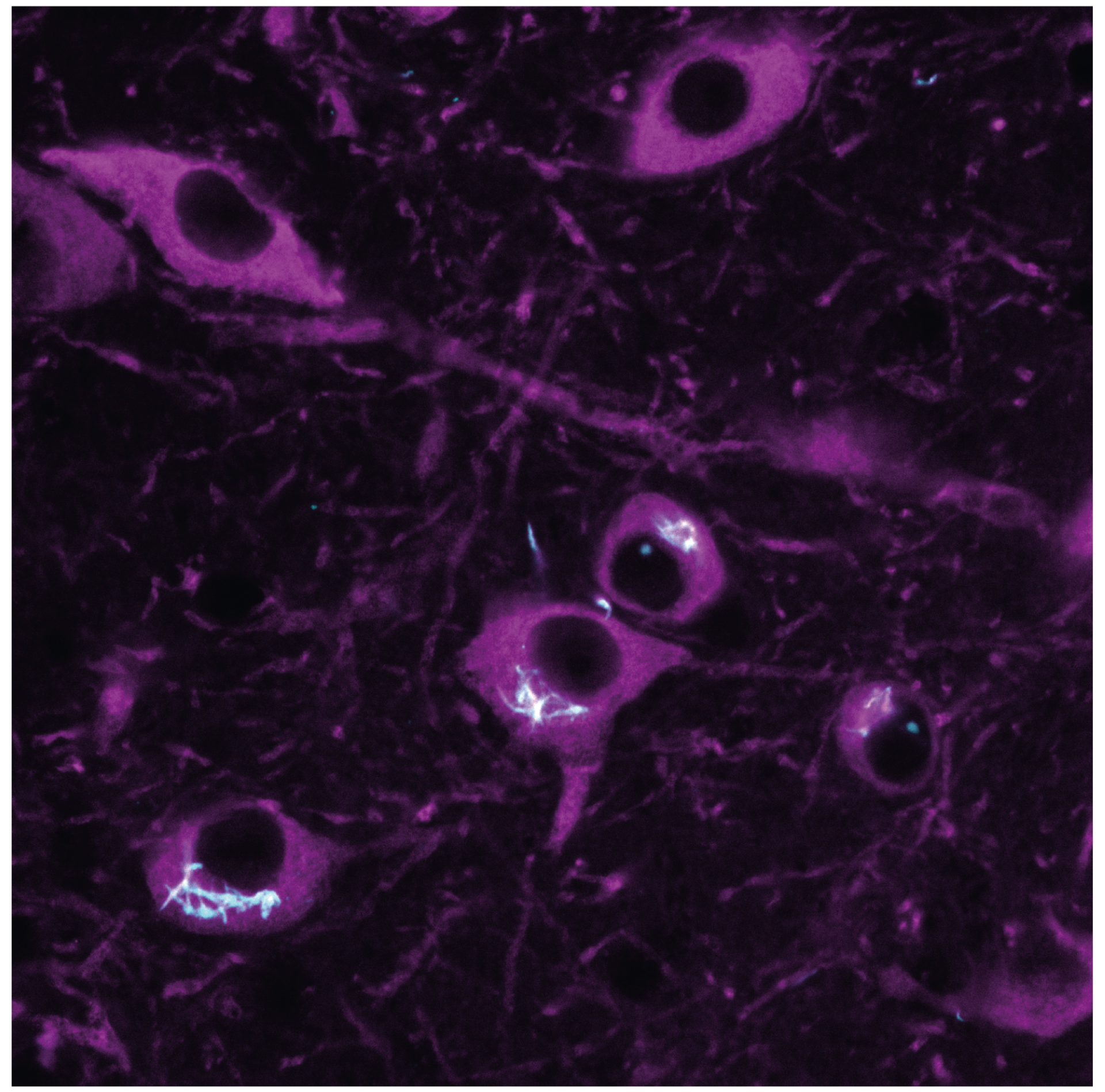
Large-scale visualization of α-synuclein oligomers in Parkinson's disease brain tissue.


In Parkinson’s, vulnerable nerve cells often contain clumps of a protein called α-synuclein. Here, we worked with colleagues from across the UK to develop a new method to see tiny clumps of α-synuclein in brain tissue from human and mouse models. The new method showed that clumps become larger and more numerous as people develop Parkinson’s, giving important clues about why and when cells die in the disease.
Scientific Abstract
Similar content
Anxa1+ dopamine neuron vulnerability defines prodromal Parkinson’s disease bradykinesia and procedural motor learning impairment
Selective innervation of subpopulations of striatal neurons by distinct sets of neurons of the external globus pallidus
Citation
DOI
Free Full Text at Europe PMC
PMC13278957Downloads
Large-scale visualization of α-synuclein oligomers in Parkinson's disease brain tissue.
In Parkinson’s, vulnerable nerve cells often contain clumps of a protein called α-synuclein. Here, we worked with colleagues from across the UK to develop a new method to see tiny clumps of α-synuclein in brain tissue from human and mouse models. The new method showed that clumps become larger and more numerous as people develop Parkinson’s, giving important clues about why and when cells die in the disease.
Scientific Abstract
Citation
DOI
Free Full Text at Europe PMC
PMC13278957Downloads